
Think of a chat session as a suitcase you never unpack. You toss in every prompt you write, every reply you get, every tool log and image you paste for reference. Early in the trip the case feels light and everything has a place. A few dozen turns later you are sitting on the lid to force it shut. You can still zip it, but the shape warps and the shirt you need is buried at the bottom. That is exactly how a context window fills in an AI builder.
A memory palace works the same way. Each room holds one idea clearly while the palace stays tidy. Keep adding rooms without a floor plan and corridors tangle. The guide who walks the palace begins to confuse one hallway with another and returns with a map that looks right but points to the wrong door. Session memory behaves like that guide. It does not fail loudly. It drifts quietly. This post shows how the suitcase fills, how to read signals before drift starts, and which habits keep the window useful across the builders you already use.
How does a context window actually fill up? #
A context window is a fixed budget of tokens that the model can read in one request. As stated by Anthropic in their context window docs, everything in that request counts toward the budget: the system prompt, every message including tool results and images, the tool definitions, and the output being generated. Each new turn stacks on the last. Providers resend prior history to preserve continuity, which is generous and also expensive. You pay in tokens and in attention.
Window sizes set the outer walls of that suitcase. OpenAI documents flagship models such as the GPT 4o family at 128k tokens in their model catalog. Anthropic documents 200k tokens for Claude 4 family models in their context window docs and related engineering notes. Those numbers define how much history you can carry before recall slips. A 128k window can hold a medium size app refactor. A 200k window can hold a longer design system conversation. Neither can hold an entire project history forever without curation.
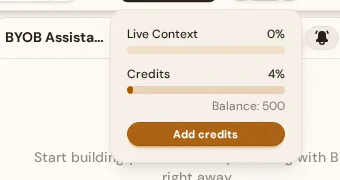
BYOB makes fill visible. In src/lib/components/Chat.svelte the chat header exposes contextFillPercent and contextLimitWarning as live stores. The indicator estimates how full session memory is so you act early instead of debugging strange output later. Cursor surfaces token use per chat. v0 and Lovable summarize context into a compact view. Bolt tracks token consumption per session. The pattern is the same behind each surface. What you send plus what the model saw plus what it wrote equals current fill. The chart below traces that arc.
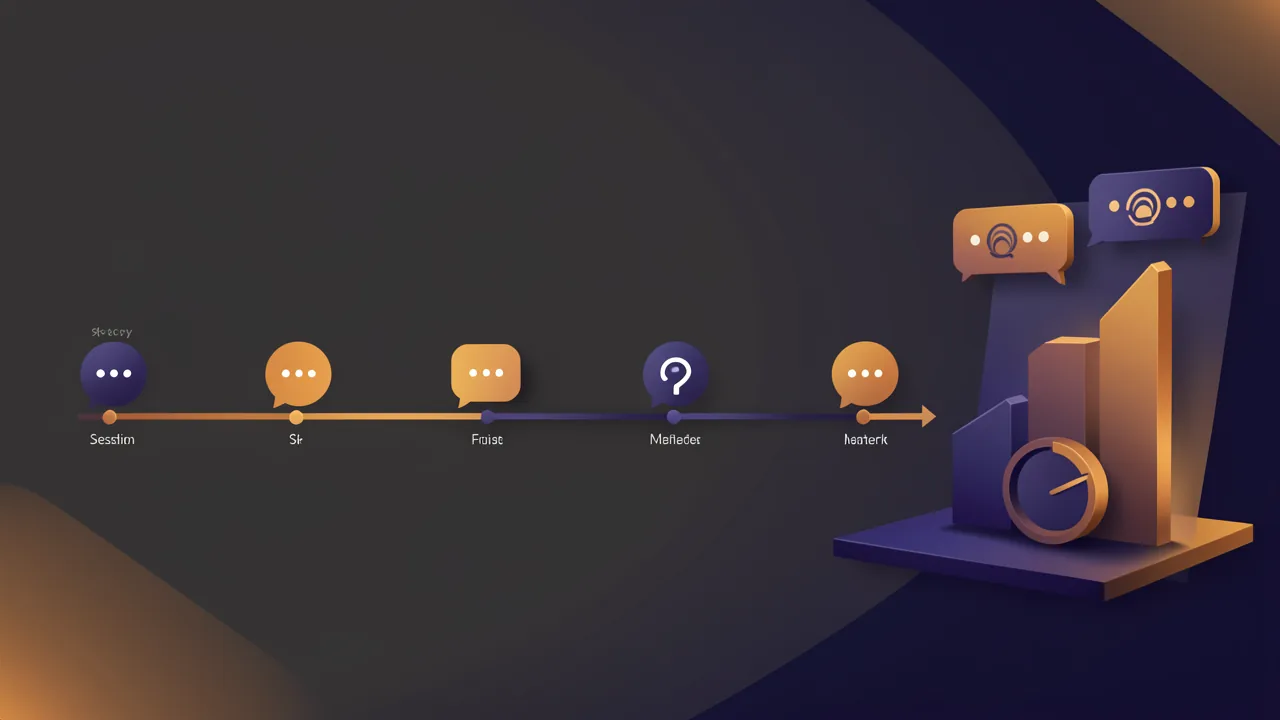
The loop is simple and a little humbling. You write a prompt. Tokens accumulate. Fill rises. Attention thins. If you stay thin too long, edits grow noisy and earlier constraints slip. If you notice early, you start a fresh chat with a short handoff and return to clear output. BYOB documents this loop in src/lib/blog/byob-context-token-tracking-guide where every prompt and reply grows the session and where high fill increases drift risk. The same loop appears in Cursor when a long refactor thread forgets file level constraints, in v0 when a design thread reverts to earlier style choices, and in Lovable and Bolt when fixes recreate earlier bugs.
How do you know the window is getting crowded before output slips? #
You cannot feel tokens the way you feel a suitcase getting heavy, so you need signals that arrive before quality drops. The most reliable signal is the fill meter itself. BYOB shows it as a percent in the chat header. Other builders show it as token count or summarized context size. Treat it as a fuel gauge. The second signal is behavior. When style choices from early prompts stop applying, when a constraint you set on turn four gets ignored on turn forty, when edits touch files you did not mention, the window is crowded even if the meter reads moderate. Attention degrades on a gradient, as Anthropic describes in their context window docs. Things get vague before they get wrong.
Chat vs act mode in BYOB adds a useful split for reading those signals. In src/lib/components/Chat.svelte the execution mode switches between chat and act. Chat leans toward planning and explanation. Act leans toward file writes and tool calls. Act burns tokens faster because tool results flow back into history. Keeping mode scoped helps. Plan in chat, then move to act for execution. Cursor has chat and composer modes. v0 alternates between visual iteration and code generation.
The table below maps what you see to what it means and when to act.
| Signal | What it means | When to act | Fix |
|---|---|---|---|
| Low fill percent | Memory is fresh and recall is steady | Continue normally | Keep prompts scoped and ship |
| Medium fill percent | History is growing and attention is stretching | Tighten prompts and avoid mixed goals | Reference only relevant files and summarize before topic change |
| High fill percent | Recall is slipping and drift risk is high | Save snapshot and prepare handoff | Start new session with four line note |
| Repeated clarifications | Prior constraints are fading from view | Pause the thread now | Summarize decisions and reset |
| Large noisy edits | Model is editing from blurred memory | Stop and reset immediately | Carry what must not change in handoff |
Low fill wants no action beyond good hygiene. Medium fill wants discipline. High fill wants a reset. Clarification loops and noisy diffs want an immediate stop even if the meter has not hit the top. Cursor threads often show repeated style drift. v0 shows components reverting to earlier layout choices. Lovable and Bolt show fixes that recreate earlier bugs.
Why does staying in one long chat make answers drift? #
Long chats drift for a reason that is almost mechanical. Every token attends to every other token. A longer thread stretches attention across more material so each instruction receives less focus. Anthropic frames this as an attention budget in their context window docs. Performance falls off gradually. Earlier instructions fade. Recent chatter dominates. The model still generates fluently, which masks the gap. Fluency without focus looks like competence until you read the diff.
That gap has a cost beyond accuracy. Each turn resends prior history so a long thread processes more input tokens per reply. Short sessions rarely need a reset. Long sessions compound cost and noise together. This is why BYOB recommends fresh sessions with a short handoff note before large refactors when fill runs high, as documented in src/lib/blog/byob-context-token-tracking-guide. Four lines carry what is done, what must not change, what is next, and one acceptance check.
Model lock exists to keep a second form of drift from compounding the first. In src/lib/components/Chat.svelte one active session holds one model choice and stores that choice under a session lock. If the thread switches models midstream, the new model inherits history written in another model dialect and continues in its own. Planning depth shifts. Naming habits shift. The diff then looks like two minds argued in one file. BYOB prevents that silent swap and routes model change through start new chat, which keeps comparisons honest because each model starts from the same snapshot. Cursor, v0, Lovable and Bolt handle this differently in surface, but the principle holds. One voice per thread keeps patches coherent. To compare models, save a checkpoint and rerun the same scoped prompt in a fresh session per model.
Speech input adds a quiet creator of fill that teams miss. In src/lib/edit/speech-to-text the BYOB editor wires browser speech recognition with interim results and a silence timer to turn spoken ideas into prompts. Dictated prompts tend to be longer and more conversational than typed ones. They describe the idea, then restate it, then add an aside. Each extra sentence adds tokens after compaction. Voice coding is powerful when you shape a rough direction, but dictated threads benefit from extra hygiene. Edit the transcript into one clear objective before sending and reference only relevant files.
How does prompt caching change the cost of a full window? #
Long builds repeat themselves. System instructions barely change between turns. Project conventions sit still. Reference files persist. Only the actual request is new. Prompt caching exploits that stability. Providers store the processed form of repeated prefixes so follow up requests skip recomputation, cutting cost and latency together. OpenAI describes cached prefixes with reads cheaper than fresh input in their prompt caching guide. Anthropic documents cache creation on reusable blocks with cheaper reads and time limited retention in their prompt caching docs. Across providers the direction is consistent. Stable prefixes win. Volatile prefixes lose.
The cache friendly layout hardly varies. Put fixed system instructions first. Put stable project context next in deterministic order. Put retrieved reference material after that. Put the changing user request last. Pin tool and file ordering instead of appending newest first. Keep clocks and random ids out of cached regions. When a session compacts or summarizes, reestablish the same canonical prefix order in the new session instead of inventing a fresh layout. Measure hit rate alongside spend. A falling hit rate with steady usage means ordering drifted, not that prices rose.
Tiered pricing adds a second reason to design sessions around the window. Budget context per phase so planning, implementation and review each get a working set instead of one ever growing thread. Reset before crossing into a higher tier for work that does not need full history. Track cost per shipped feature, not raw token totals.
Model routing completes the trio. Classification, extraction and scoped edits run well on smaller models. Architecture decisions and ambiguous debugging deserve stronger reasoning. Default to a capable mid tier model and keep one model per session for consistency.
What hygiene habits keep the window useful all week? #
Hygiene is not glamorous. It is the routine that keeps the suitcase easy to pack every Monday. Use the checklist below as a daily habit, not a rescue plan after drift.
Hygiene checklist that saves tokens every day
- Ask one clear objective per prompt and state acceptance in one line
- Reference only relevant files or modules instead of the whole project
- Keep prompts stable in order so cached prefixes continue to hit
- Keep dynamic content such as timestamps out of cached regions
- Summarize decisions before changing topic so the next turn starts clean
- Watch the fill meter and plan a handoff when it reads high
- Save a snapshot before large edits so a fresh session can start from a known point
- Use a four line handoff: what is done, what must not change, what is next, one acceptance check
- Start a new chat for unrelated work instead of mixing goals in one thread
- Keep chat and act work scoped so tool logs do not drown planning memory
- Edit dictated speech into tight prompts before sending
- Track three numbers weekly: cache hit rate, cost per shipped feature, reruns per feature
After each shipped feature note which turn first went wrong and why. Patterns emerge fast. Vague verbs, missing examples and unstated constraints appear again and again. Fix the pattern once and every future feature gets more economical. The most economical token is the turn you never needed.
If you want a place to practice tighter prompts before you spend tokens, try the AI website prompt builder. It helps you shape a single objective plus constraints and acceptance before you open a build thread. One clear prompt in the builder often replaces three loose prompts in the chat.
Cost control sits beside context control. BYOB starts at $0 with 100 starter credits and uses credit based pricing, as listed on pricing and explained in credit based pricing explained. The UI that surfaces fill lives as reactive state in a Svelte component, a pattern covered in the Svelte overview, and ships on edge infrastructure of the kind described in the Cloudflare Workers docs.
What are the trade-offs? #
Hygiene keeps long chats sharp. Every habit in this guide charges a small tax.
| Where the habits win | Where they cost |
|---|---|
| Fresh sessions with short handoff notes reset recall, so week long builds stop drifting | Splitting threads loses ambient context. Handoffs compress, and compression drops detail |
| One model per session keeps reasoning stable, on windows like the ones Anthropic documents (https://docs.anthropic.com/en/docs/build-with-claude/context-windows) | Model lock trades away per task model choice. The best model for prose may not lead code |
| Stable prompts reuse cache and cut reprocessing (https://platform.openai.com/docs/guides/prompt-caching) (https://docs.anthropic.com/en/docs/build-with-claude/prompt-caching) | Writing tight prompts with acceptance criteria takes longer than firing loose ones |
| Watching fill percent ties cost to behavior (https://byob.studio/pricing) | Meter watching can turn builders timid about exactly the experiments that teach |
Skip the ceremony for short scoped sessions: one landing page in one sitting rarely drifts. Pay the hygiene tax once threads span days or edits grow noisy.
Who this is for (and who should skip it) #
This guide helps if you run long build chats and want to keep output steady by watching context fill and using fresh sessions well. If you ship across several sessions per day or see edits grow noisy over time, the suitcase and palace pictures plus the checklist give you a shared language for the team. Designers who prompt visually, engineers who prompt with code, and founders who prompt with outcomes all benefit when the window stays tidy.
Skip it if your sessions stay short and scoped to one feature at a time. A single landing page in one sitting rarely hits drift, and the meter will sit comfortably low. Keep prompts focused until tier cliffs or rerun costs show up in weekly numbers.
- Best for developers running multi session builds with noisy edits.
- Best for designers prompting visually across long threads.
- Best for founders keeping outcome prompts steady as context fills.
What we learned building this #
BYOB chat sessions grow with every prompt and reply, so we surface a context fill meter and recommend fresh sessions with a four line handoff, a pattern reflected in src/lib/components/Chat.svelte where contextFillPercent and contextLimitWarning are reactive stores and where session model lock lives under byob session model lock in local storage. Chat vs act mode branches execution path in the same file so planning chatter and file edit logs do not mix without intent. That split keeps fill predictable. We keep the editor preview and snapshot history as the durable side of the handoff.
We also learned that voice input changes prompt shape. In src/lib/edit/speech-to-text the browser interface streams interim results and restarts on silence, which encourages longer conversational prompts. Dictation needs an edit pass before send. The same file that makes hands free building possible increases the need for hygiene.
Our internal guide in src/lib/blog/byob-context-token-tracking-guide lists what counts toward the window and how high fill increases drift risk, and src/lib/blog/byob-model-lock-chat-sessions explains why one model per active chat keeps reasoning stable. Model lock keeps behavioral consistency. Context tracking keeps memory quality. Together they keep the window clear.
Open your longest chat session today and glance at the fill meter before your next prompt. That one glance remains the most economical performance optimization in the entire product.