


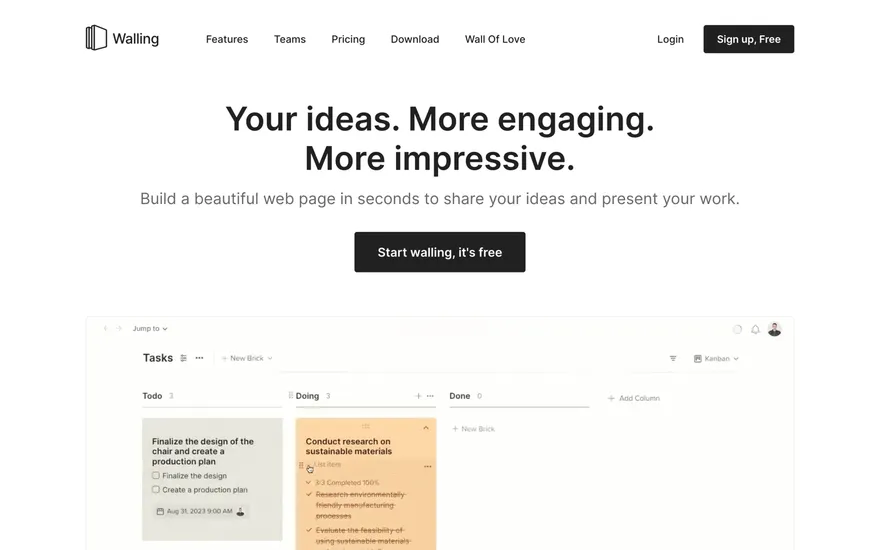
Walling Walling is a visual and flexible workspace that helps individuals and companies organise all their ideas and tasks using kanban boards, lists, shareable links, and walls of content. Visit ↗
BYOB New inbox in every project
No-code should mean you skip the syntax, not that you lose the result. BYOB takes a written description of your app and produces a working project with the interface, storage and sign-in already connected.
Runs on the stack you trust
Prompt to product
Compare the one-line brief with what BYOB ships. Real layout, data, and deploy status, editable from the same workspace.
Team Tasks
Shared task tracking
Drag the handle. Or focus it and use the arrow keys.
Get inspired
Real sites that do it well. Build something like this with BYOB.
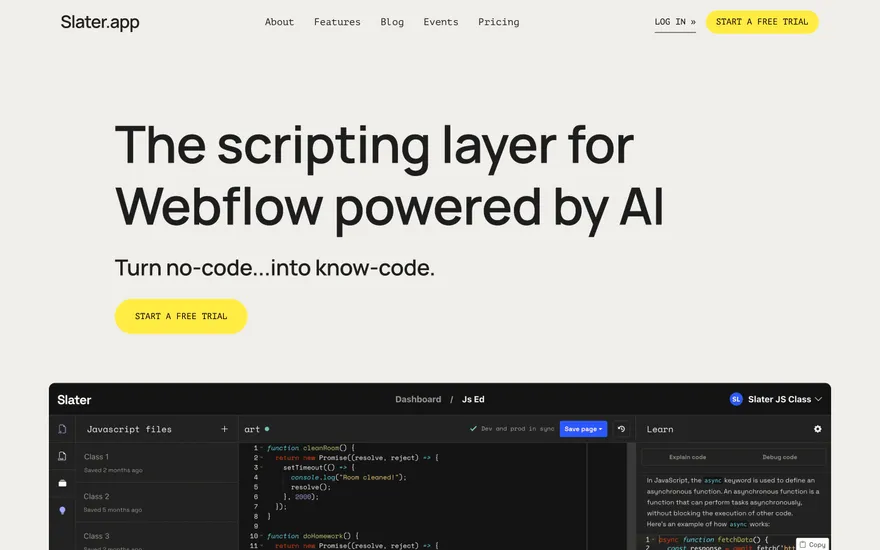
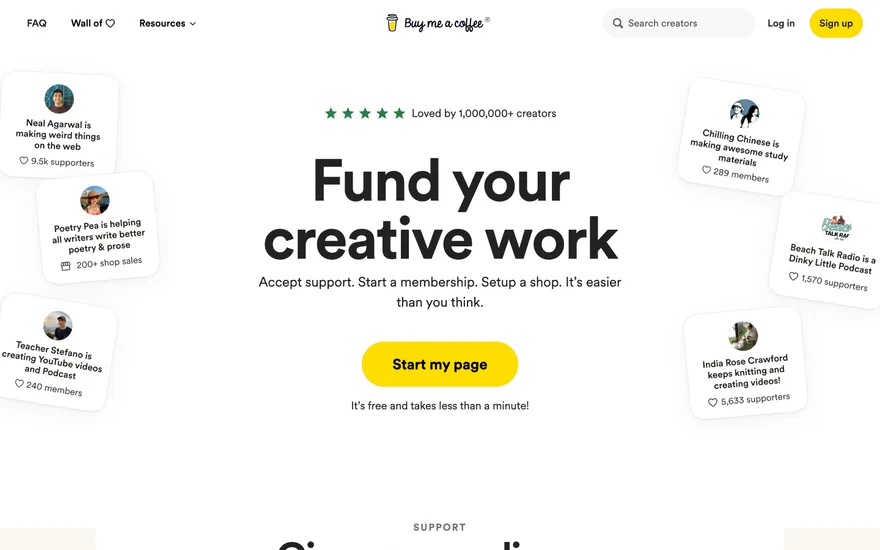
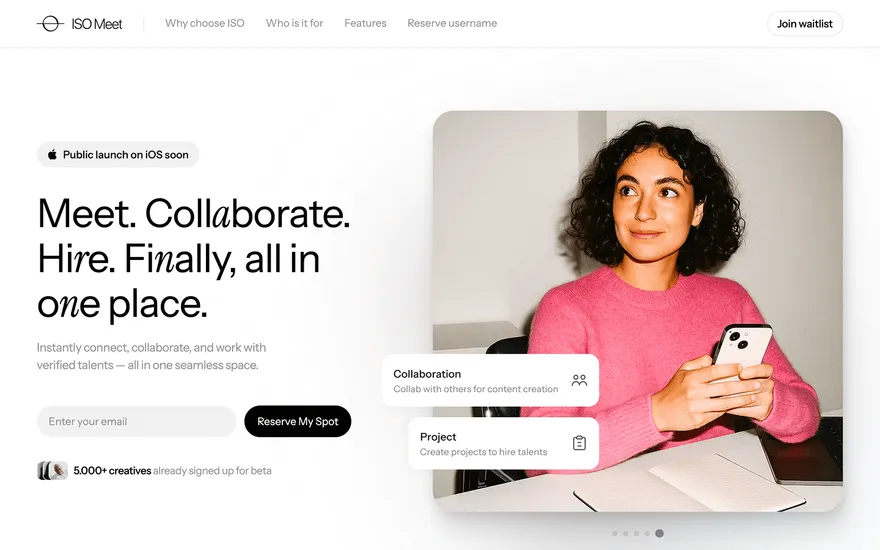
Fresh from the community
See what builders ship, or start from an example.
Live workspace
The workspace is built for repeated product work, not disposable demos. Every generated file stays inspectable, every change is visible, and every follow-up can target the exact part of the app you care about.
01 · EDITOR
Every file BYOB writes stays visible and editable. Follow-ups target the exact lines you care about instead of regenerating from scratch.
<script lang='ts'>type Task = { id: string; title: string; done: boolean
}let tasks = $state<Task[]>([])function toggleTask(id: string) {task.done = !task.done // just added by BYOB}</script>02 · AI COMMAND
Describe the outcome once. BYOB turns it into a build plan, implements it step by step, and keeps every change visible while you iterate.
Your prompt
“Build a todo app for beginners”
Build plan
80%03 · LIVE PREVIEW
The preview updates as BYOB works, with deploy status attached, so the path from edit to production stays inspectable.
Team Tasks
Shared task tracking
Prompt to app
Start conversationally, approve the shape, let Tool Mode implement, then refine and deploy from the same workspace.
Agent and backend
Connect Codex, Claude Code, or Antigravity to your project, then store data and ship to production without leaving the workspace.
npx -y byob-cli codex installApprove only the projects your agent can touch, then read context, edit files, inspect diffs, test previews, and roll back from your terminal.
Rated 4.9/5 by developers and founders using BYOB to move from idea to shipped product.
Built for shipping
BYOB handles product planning, implementation, preview, testing, database work, and deployment from one focused interface, with coding-agent access and production analytics when you want to keep working from your own terminal.
This part is hands-on. The cards drift until you touch them. Drag to rearrange, or press and hold one to feel it push back.
Give Codex, Claude Code, or Antigravity scoped access through BYOB CLI or Agent MCP. Your agent reads context, edits code, tests previews, and deploys from your terminal.
Every change lands as a commit. Inspect history, compare diffs, and see exactly what changed since the last deploy.
Every project ships with an inbox. Collect messages, leads, and feedback from your app without wiring a third party.
Send magic links, OTP codes, and transactional mail from your own sender address. Resend-backed, no SMTP setup.
Offer Continue with Google plus passwordless email codes. Sessions and callbacks are handled.
Point your domain at BYOB with guided DNS checks. Certificates are automatic.
Click any element in the live preview and describe the change. Copy, spacing, color, behavior.
Run full-site or feature checks and get implementation-level feedback you can apply in one step.
Step between saved states or redeploy a known commit when an experiment goes sideways.
Builds publish to production hosting in one step. Deploys can auto-save the project state first.
Worker traffic, errors, CPU timing, subrequests, and custom-domain status from the workspace.
Connect Supabase and BYOB reads schemas, drafts migrations, and generates types that match your app.
Invite people in and keep sessions coordinated so work never overwrites work.
Simple pricing
Pay as you go when you are exploring. Move to Pro or Max when BYOB becomes part of your regular build workflow.
$1 = 100 credits
2,000+ credits/mo
8,000+ credits/mo
Live estimator
Try the cost calculator. Drag the pages slider, toggle the options, and watch the agency quote vs BYOB update instantly.
Open full cost calculator →$5,750 upfront
~$1,150 / year
~$45 in credits
BYOB builds the same site from one prompt and hosts it on the edge. Planning estimates, not quotes.
See BYOB plansNeed white-label and SSO? Talk to us →
BYOB is a no-code app builder that turns a plain-language description into a working web app: it generates the interface, connects data storage and adds login, then publishes it. The difference is that it writes real code, so you are never locked out of your own project.
With a traditional no-code editor you assemble screens from blocks and hope the data model keeps up. BYOB works the other way around: you explain what the app is for, who uses it and what they need to do, and the builder proposes a structure before generating it. That makes the tool practical for internal tools, customer portals and small products where the workflow matters more than pixel-perfect layout.
The result is not a screenshot or a locked canvas. You get routes, forms, a data layer and login in a standard project. Records persist in built-in data storage so an app that stores tasks, bookings or submissions keeps working after you close the tab. That distinction matters when a project outlives its first version: the app is a real software asset you can back up, test and extend, not a collection of settings that only one vendor can render.
No-code workflows shine when requirements are stable and fast delivery matters. If your app needs unusual business rules, heavy integrations or performance work, you will eventually want the source. Because BYOB generates that source from the start, the escape hatch is already open rather than a migration project. You can test the limits in the visual workflow, then drop into the code for the parts that need custom logic, and the two approaches share one project rather than living in separate tools.
Many projects begin with one person and a prompt, then grow a team. A developer joining a BYOB project inherits a familiar stack:, Tailwind CSS, version history and an editor. They can review diffs, extend endpoints and keep the visual workflow for routine copy and layout changes. There is no proprietary runtime to learn and no black box to reverse-engineer, so onboarding is measured in hours. The person who started the project can keep shipping content while the developer handles logic, without either waiting on the other.
There is no separate publishing step to learn. Deployment, custom domains and SSL are part of the project lifecycle, so a no-code app can go from description to a public URL without leaving BYOB. When something breaks, roll back to an earlier version instead of debugging on a live site. This is the part that surprises people used to assembling a stack: the same workspace that generated the screens also runs them, which removes a whole category of account setup, credential juggling and configuration files.
FAQ
For everyday building, yes - you describe changes and review them. The generated code is available whenever you or a developer want to inspect it.
Yes. built-in data storage, powered by, gives generated apps persistent storage without a separate data account.
Internal tools, booking and request forms, customer portals and simple CRUD products are the sweet spot; complex real-time or bespoke algorithms may need code.
Yes. Export the project as ZIP or use the; it is standard with no proprietary runtime.
Start with one clear prompt. BYOB will help turn it into a product you can inspect, edit, test, and ship.
 npm
npm