


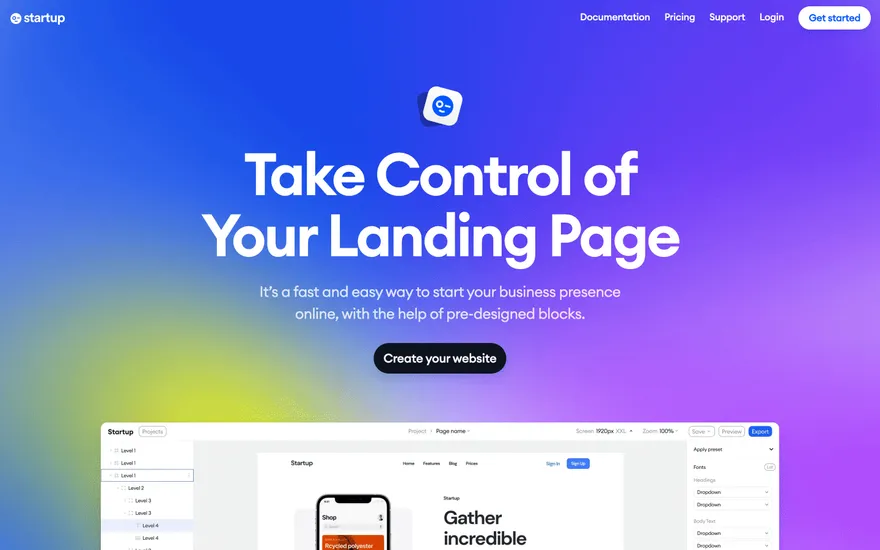
Startup Landing-page builder with strong templates. Visit ↗
BYOB New inbox in every project
An HTML site maker should give you a working page and honest markup, not a design file that never leaves the editor. This page explains what BYOB OnePage generates, how the result is hosted, and how to take the code with you if you prefer.
Runs on the stack you trust
Prompt to product
Compare the one-line brief with what BYOB ships. Real layout, data, and deploy status, editable from the same workspace.
Team Tasks
Shared task tracking
Drag the handle. Or focus it and use the arrow keys.
Get inspired
Real sites that do it well. Build something like this with BYOB.
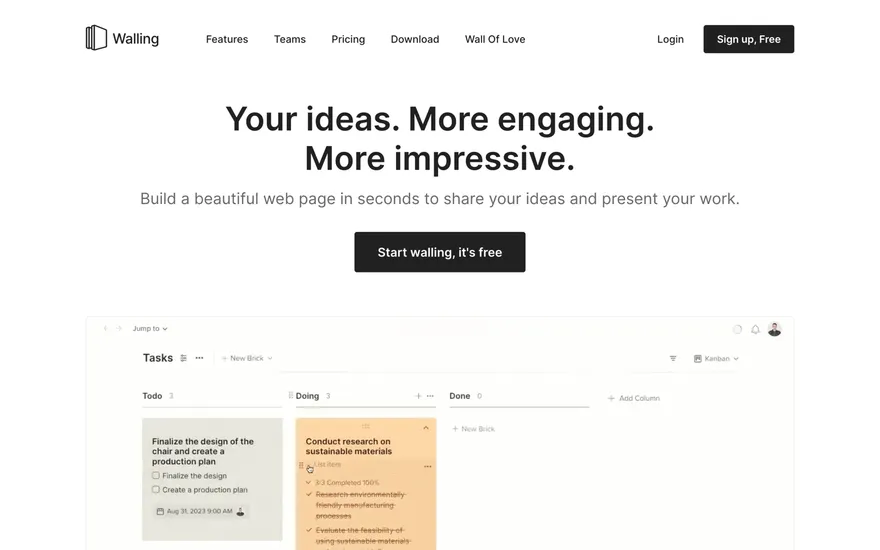
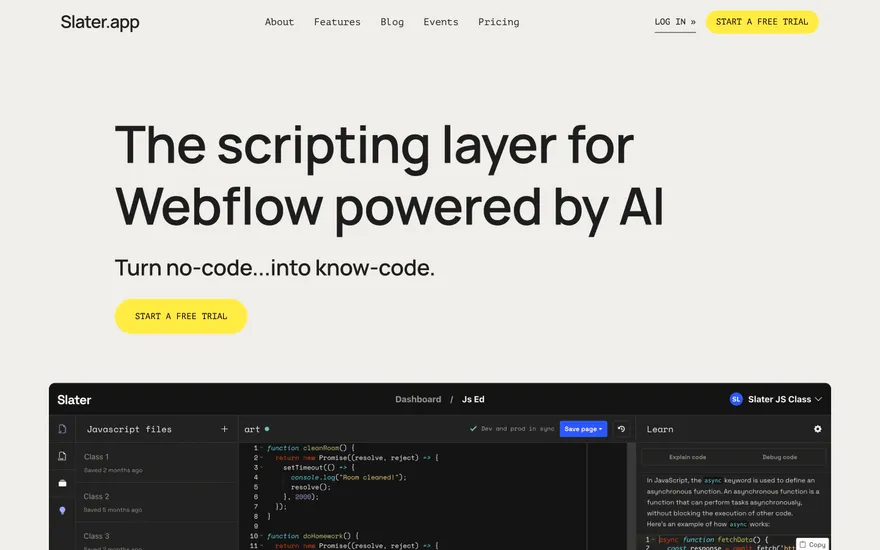
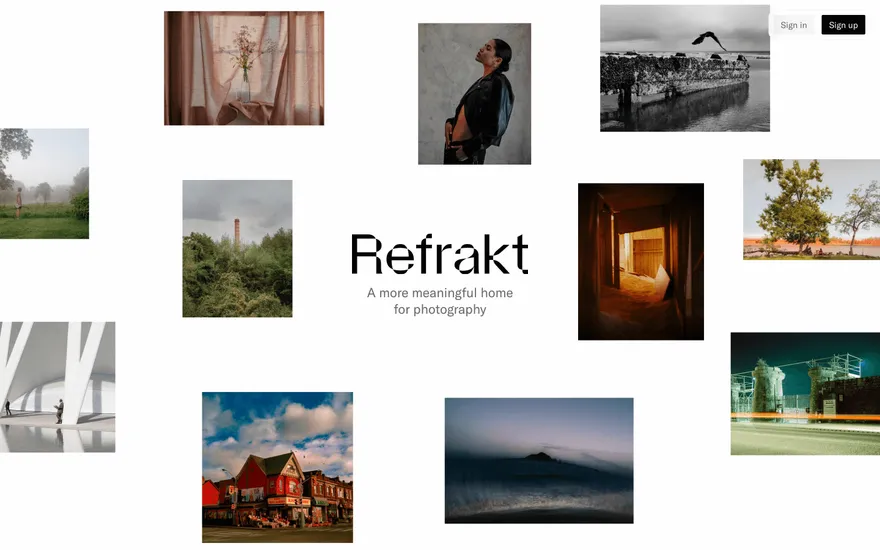
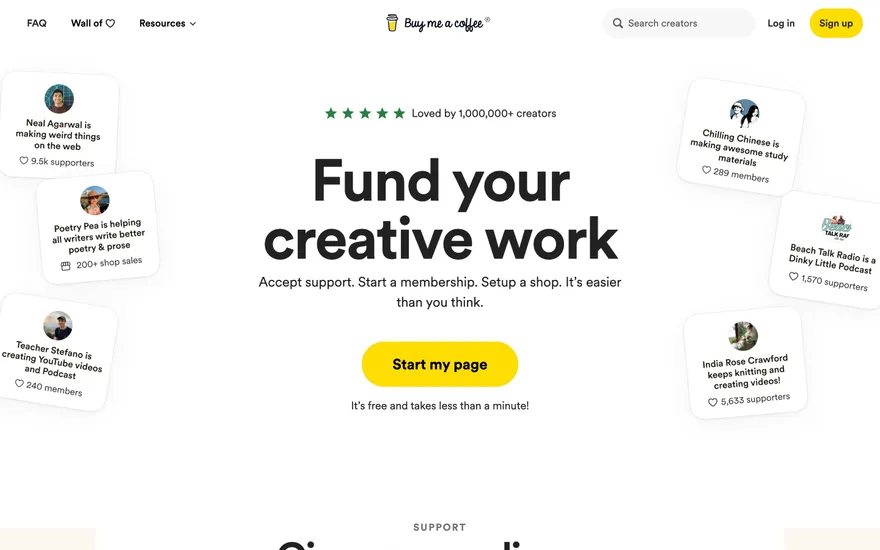
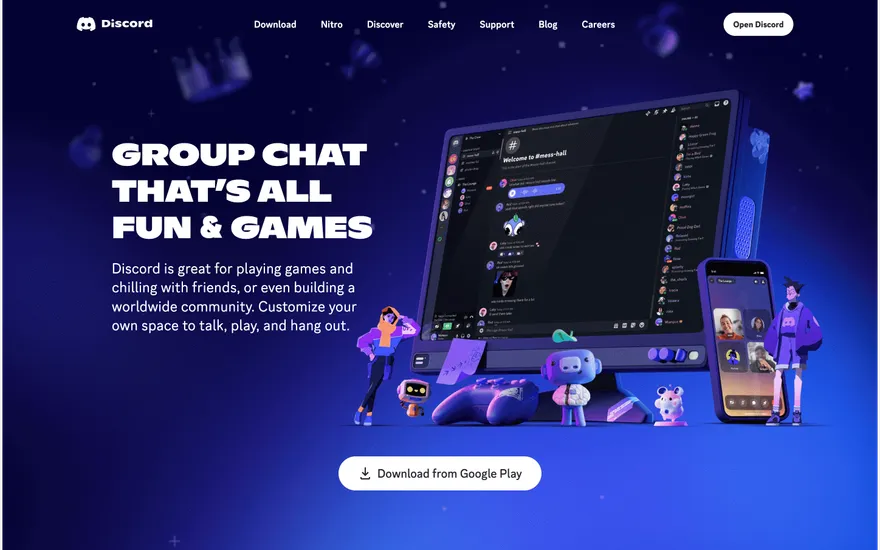
Fresh from the community
See what builders ship, or start from an example.
Live workspace
The workspace is built for repeated product work, not disposable demos. Every generated file stays inspectable, every change is visible, and every follow-up can target the exact part of the app you care about.
01 · EDITOR
Every file BYOB writes stays visible and editable. Follow-ups target the exact lines you care about instead of regenerating from scratch.
<script lang='ts'>type Task = { id: string; title: string; done: boolean
}let tasks = $state<Task[]>([])function toggleTask(id: string) {task.done = !task.done // just added by BYOB}</script>02 · AI COMMAND
Describe the outcome once. BYOB turns it into a build plan, implements it step by step, and keeps every change visible while you iterate.
Your prompt
“Build a todo app for beginners”
Build plan
80%03 · LIVE PREVIEW
The preview updates as BYOB works, with deploy status attached, so the path from edit to production stays inspectable.
Team Tasks
Shared task tracking
Prompt to app
Start conversationally, approve the shape, let Tool Mode implement, then refine and deploy from the same workspace.
Agent and backend
Connect Codex, Claude Code, or Antigravity to your project, then store data and ship to production without leaving the workspace.
npx -y byob-cli codex installApprove only the projects your agent can touch, then read context, edit files, inspect diffs, test previews, and roll back from your terminal.
Rated 4.9/5 by developers and founders using BYOB to move from idea to shipped product.
Built for shipping
BYOB handles product planning, implementation, preview, testing, database work, and deployment from one focused interface, with coding-agent access and production analytics when you want to keep working from your own terminal.
This part is hands-on. The cards drift until you touch them. Drag to rearrange, or press and hold one to feel it push back.
Give Codex, Claude Code, or Antigravity scoped access through BYOB CLI or Agent MCP. Your agent reads context, edits code, tests previews, and deploys from your terminal.
Every change lands as a commit. Inspect history, compare diffs, and see exactly what changed since the last deploy.
Every project ships with an inbox. Collect messages, leads, and feedback from your app without wiring a third party.
Send magic links, OTP codes, and transactional mail from your own sender address. Resend-backed, no SMTP setup.
Offer Continue with Google plus passwordless email codes. Sessions and callbacks are handled.
Point your domain at BYOB with guided DNS checks. Certificates are automatic.
Click any element in the live preview and describe the change. Copy, spacing, color, behavior.
Run full-site or feature checks and get implementation-level feedback you can apply in one step.
Step between saved states or redeploy a known commit when an experiment goes sideways.
Builds publish to production hosting in one step. Deploys can auto-save the project state first.
Worker traffic, errors, CPU timing, subrequests, and custom-domain status from the workspace.
Connect Supabase and BYOB reads schemas, drafts migrations, and generates types that match your app.
Invite people in and keep sessions coordinated so work never overwrites work.
Simple pricing
Pay as you go when you are exploring. Move to Pro or Max when BYOB becomes part of your regular build workflow.
$1 = 100 credits
2,000+ credits/mo
8,000+ credits/mo
Live estimator
Try the cost calculator. Drag the pages slider, toggle the options, and watch the agency quote vs BYOB update instantly.
Open full cost calculator →$5,750 upfront
~$1,150 / year
~$45 in credits
BYOB builds the same site from one prompt and hosts it on the edge. Planning estimates, not quotes.
See BYOB plansNeed white-label and SSO? Talk to us →
BYOB OnePage generates a website from a prompt and produces real, semantic markup behind it, not an image mockup. You edit the page visually or ask the assistant for changes, publish it free, or export the project as a ZIP if you would rather host the code yourself.
The phrase covers a wide range, from a drag-and-drop tool that hides its output to a text editor where you type every tag. A useful middle ground gives you a finished page now and readable code underneath if you want it later. BYOB OnePage builds the page from your description and renders it as standard HTML and CSS, so what visitors receive is an ordinary web page. You are not locked into a proprietary canvas, and you can inspect or export the result rather than trusting that it would translate cleanly.
Be clear about this: BYOB generates a small project, not one hand-written.html file with everything inline. The published page is still plain HTML, CSS, and JavaScript to the browser, and the build produces standard output. If you want maximum portability, the project can be exported as a ZIP and hosted on any static host. What you lose in single-file convenience you gain in maintainability, since the markup, styles, and structure stay organised instead of piled into one enormous document.
Generated sections use real heading levels, paragraphs, lists, buttons, and labeled form fields rather than a wall of styled divs. Images carry alt text you can edit, and interactive elements are keyboard reachable. That matters for two audiences: people using screen readers, and search engines trying to understand what the page is about. You can still adjust anything by hand after export. Starting from sensible structure is far easier than retrofitting accessibility onto a page built entirely from generic containers with no meaning behind them.
If you already write HTML and CSS, generating a first draft can save the tedious part, the boilerplate layout, responsive breakpoints, and form markup, while leaving the interesting decisions to you. If you do not code, this is a way to ship a real page without learning a syntax first. Either way the deliverable is the same kind of artifact: a document a browser renders. The difference is only whether you author every tag yourself or start from a generated structure and edit the parts that matter to you.
Publishing through BYOB gives you a live address immediately and handles the delivery for you, so there is no server, DNS record, or certificate to configure at the start. When you are ready, connect a custom domain from a paid plan. If you would rather run it yourself, export the project and publish the build output to any static host that serves files. That flexibility is the point: the page is not captive to the builder, and moving it later is a publishing decision rather than a rewrite.
Once exported, the project is yours to modify with the editor and tooling of your choice. That suits developers who want to drop in a component, wire a different form endpoint, or add analytics beyond what the platform provides. It also means the generated page is a starting point rather than a final answer. If you would rather not maintain any of it, keep editing inside BYOB and let the hosted version handle updates; if you want full control over the markup, the export is the door to it.
FAQ
No. You describe the page and edit visually or by chatting. Knowing HTML helps if you plan to export and modify the code yourself.
Yes. The project can be exported as a ZIP containing the source, which you can host on a static provider of your choice.
The published page is standard HTML, CSS, and JavaScript. The build output can be served by any static host; some setups may need a small build step.
Sections use semantic headings, lists, buttons, and labeled fields, with editable alt text, which gives a solid accessibility baseline you can extend.
If you export and self-host, you can edit the project freely. Inside BYOB, visual controls and the assistant cover most styling needs.
Start with one clear prompt. BYOB will help turn it into a product you can inspect, edit, test, and ship.
 npm